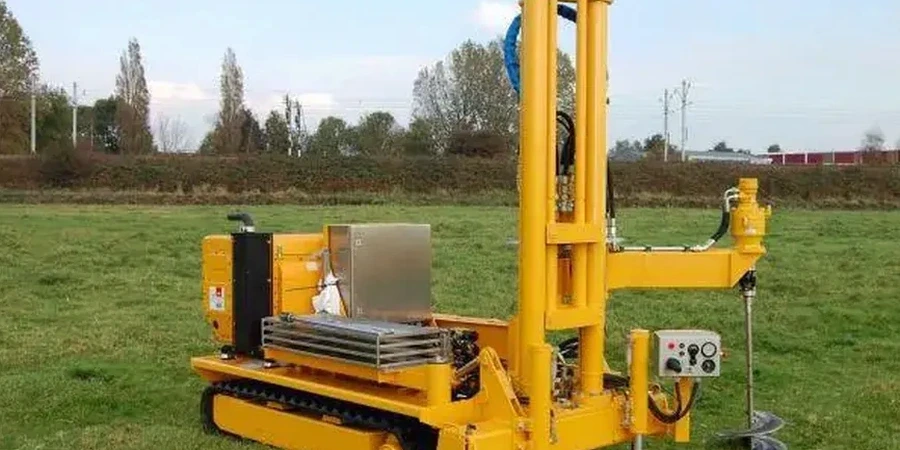
Leicester sits on a complex mix of Mercia Mudstone, glacial till, and River Soar alluvium. The geology changes fast here—one site has stiff clay at three metres, the next hits soft silts at ten. Standard boreholes can miss these transitions, but a CPT truck pushes a cone at constant speed and logs resistance every centimetre. That continuous profile picks up thin lenses of peat or sand that a trial pit can't resolve. With the city expanding fast under the Local Plan, and sites in Abbey Ward or near the Great Central Railway requiring precise bearing capacity data, we run CPT testing to BS EN 1997-2 and BS 5930, giving contractors and structural engineers the stratigraphy they need to design shallow foundations or deep piles without guesswork. The Soar floodplain is especially tricky—soft alluvium overlying dense till—and a CPT trace shows exactly where that transition occurs, so you can set pile toe levels with confidence. We also combine CPT data with slope stability analysis for projects on Leicester's steeper residential gradients around Evington and Knighton.
A CPT log gives you a continuous soil profile without a single borehole—faster, cleaner, and every centimetre recorded.
Area-specific notes
The CPT truck is a heavy rig—a 20-tonne truck with a hydraulic ram mounted centrally, pushing steel rods into the ground at a constant 20 mm per second. On Leicester's smaller infill plots, especially off Narborough Road or in Westcotes, access is the first challenge. The truck needs firm ground and a clear overhead. Power lines, overhanging trees, or soft grass verges can stop a job before it starts. Underground, the real risk is hitting something unexpected: an old brick culvert, a backfilled cellar, or a buried service. We run a CAT and Genny sweep before every push, and on brownfield sites we check historical maps. Another Leicester-specific issue is the transition from weathered mudstone to unweathered rock—if the cone refusal hits early, we can't always retrieve the full profile without switching to a rotary follow-up. The team on site makes those calls in real time. Every push is supervised by an engineer who logs the data as it comes in, so anomalies show up immediately.
Common questions
How much does a CPT test cost in Leicester?
A single CPT sounding in Leicester typically ranges from £110 to £210, depending on depth, access, and whether you need a piezocone with pore pressure measurement. A grid of soundings for a larger site will cost more, and we provide a fixed quote after reviewing your location and ground conditions.
How deep can a CPT rig go in Leicester's ground?
In Leicester's Mercia Mudstone, we routinely reach 20–25 metres before encountering refusal. On softer alluvial sites near the River Soar, depths of 30 metres are possible. The cone stops when tip resistance exceeds the rig's 20-tonne push capacity, which usually happens on unweathered mudstone or dense sand layers.
Do I still need boreholes if I have CPT data?
CPT gives you continuous soil behaviour data but no physical samples. In Leicester, many engineers combine one or two boreholes with several CPT soundings—the boreholes provide samples for lab testing, and the CPT fills in the gaps between them, giving a much clearer picture of the ground profile across the whole site.